Blackberry Pavlova

August is when the blackberries are ready and there are some epic ones this year – probably because of all the rain!

I love to go blackberry picking and I’m very happy its not been as hot as last year. I love blue skies, warm breezes, but NOT all the bugs that come with it!
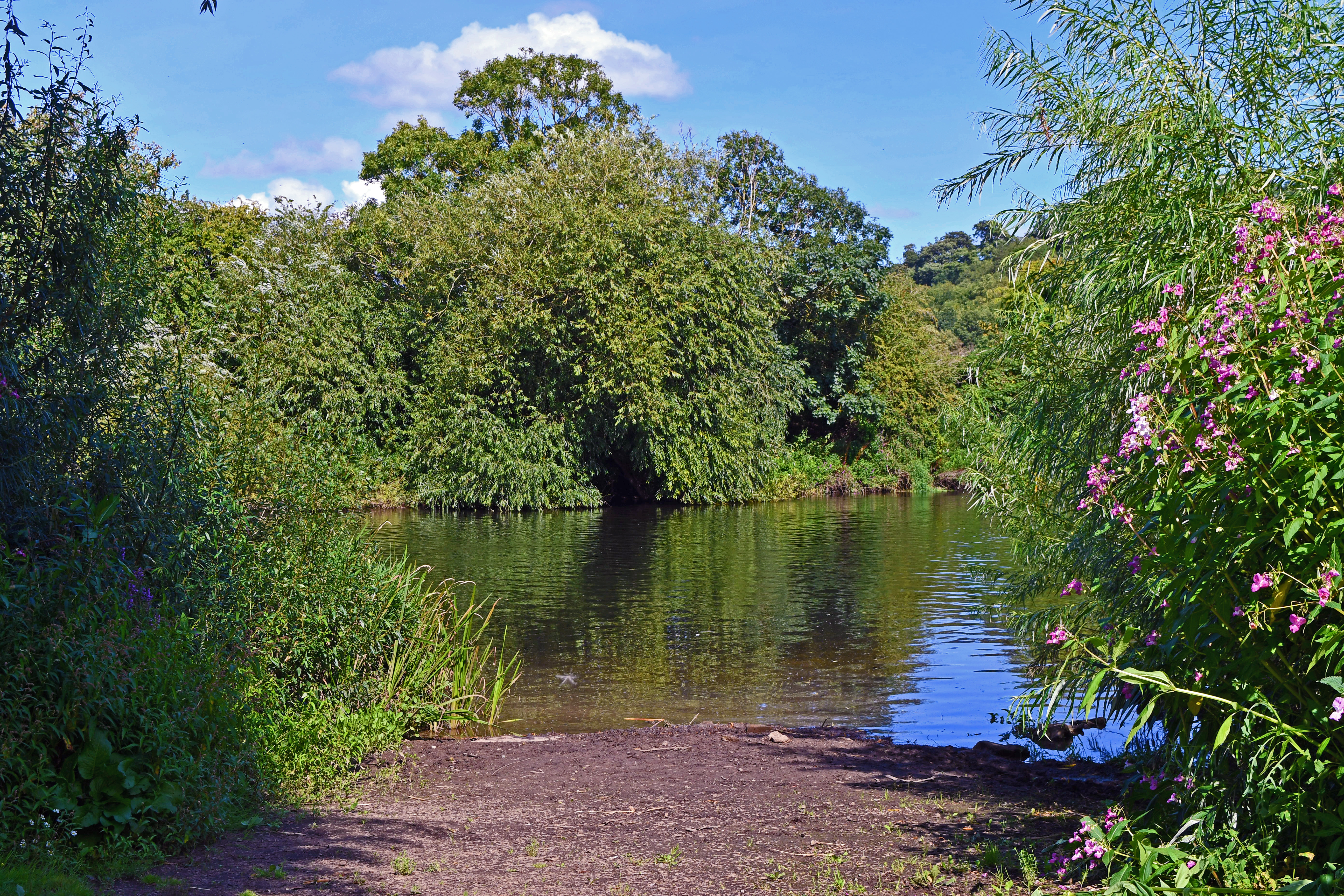
I’m lucky to live very close to the river Trent where its quite rural and there are lots of hedgerows, full this year, of lovely, big blackberries.
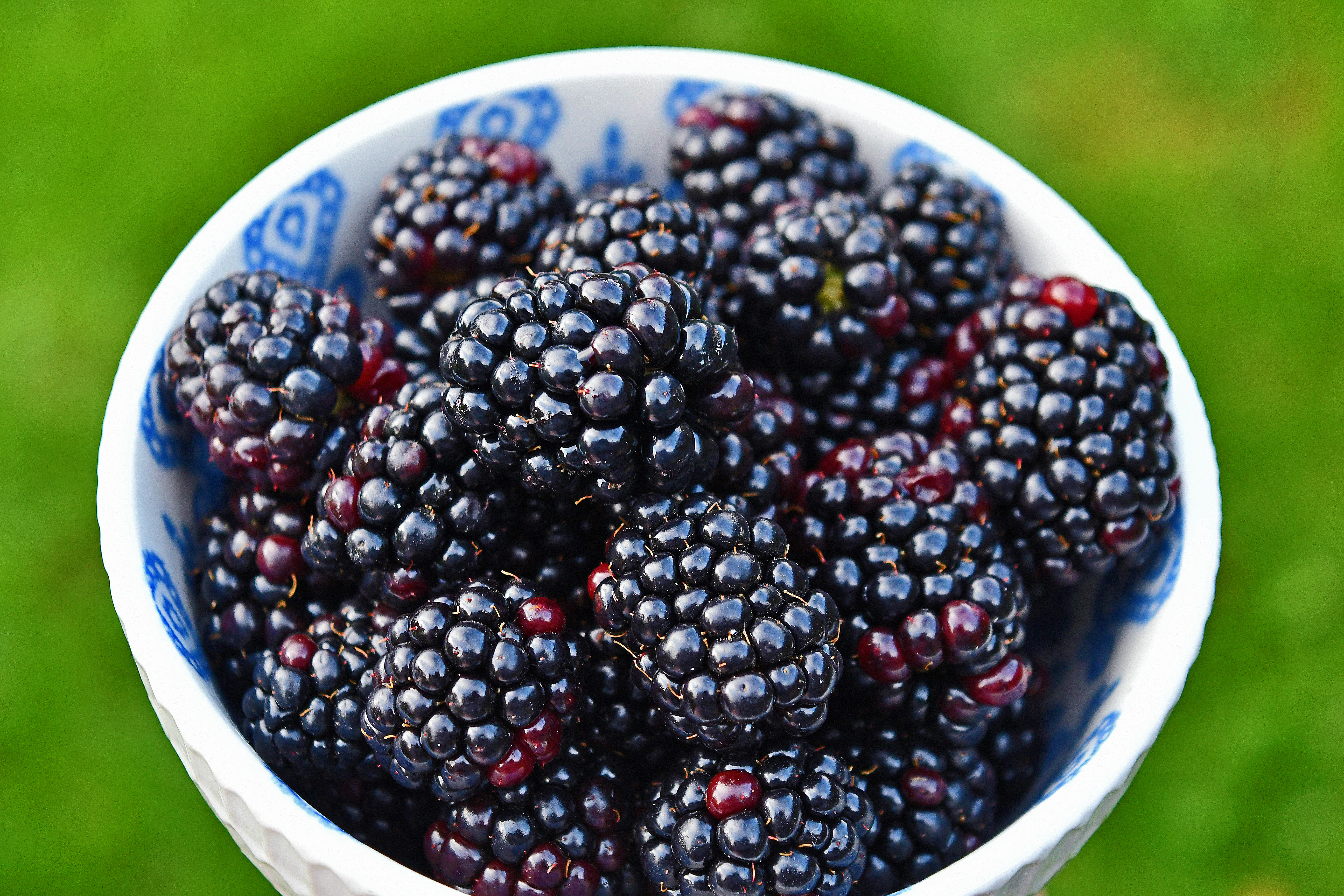
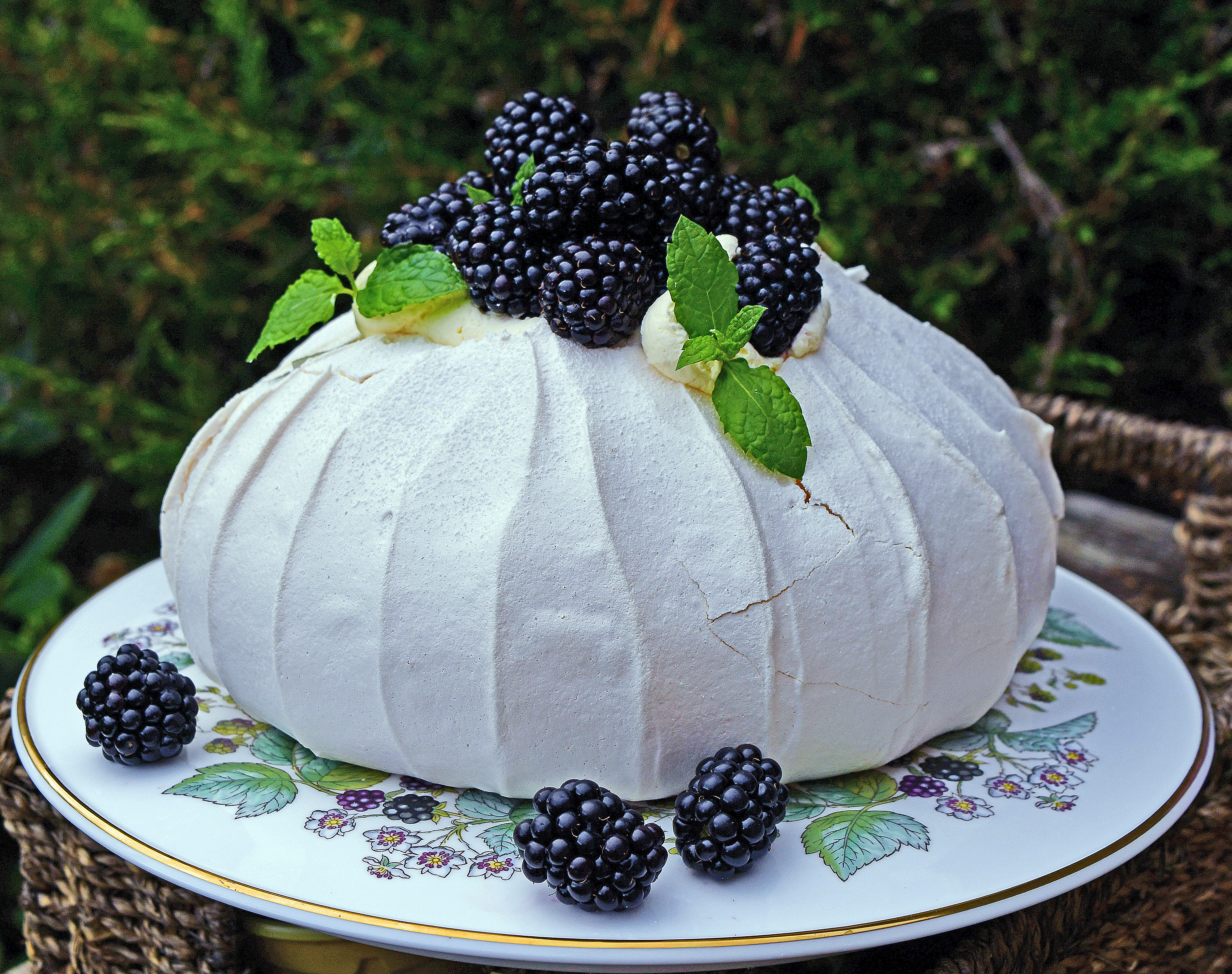
I decided to have a go at making a pavlova with my harvest and fill it with whipped cream, lemon curd and the big juicy (washed!) blackberries. I soak my berries briefly in salt water and then rinse with lots more water to get rid of anything lurking in them…
Ingredients

5 egg whites – I use room temperature eggs
250g caster sugar
Pinch of salt
1/4 tsp cream of tartar
1tsp of vanilla extract
Lemon – you can use vinegar too
1tbs corn flour
Filling:
500ml double/heavy cream
vanilla extract
Lemon curd
1-3 tbs sieved icing sugar
Blackberries
Mint and icing sugar to garnish

Method

Make sure the bowl and whisk are really clean and there are no bits of yolk in the egg whites. I rubbed the bowl and whisk attachment with half a lemon to make sure there was no grease residue and the acid helps stabilise the egg whites too.

Draw a circle on some baking parchment – I used a bowl that was around 6/7 inches and then turn it over so the pencil won’t end up on the pavlova. Pre heat the oven to 150°C fan/130°F

Place the egg whites, salt and cream of tartar in the bowl and whisk until soft peaks
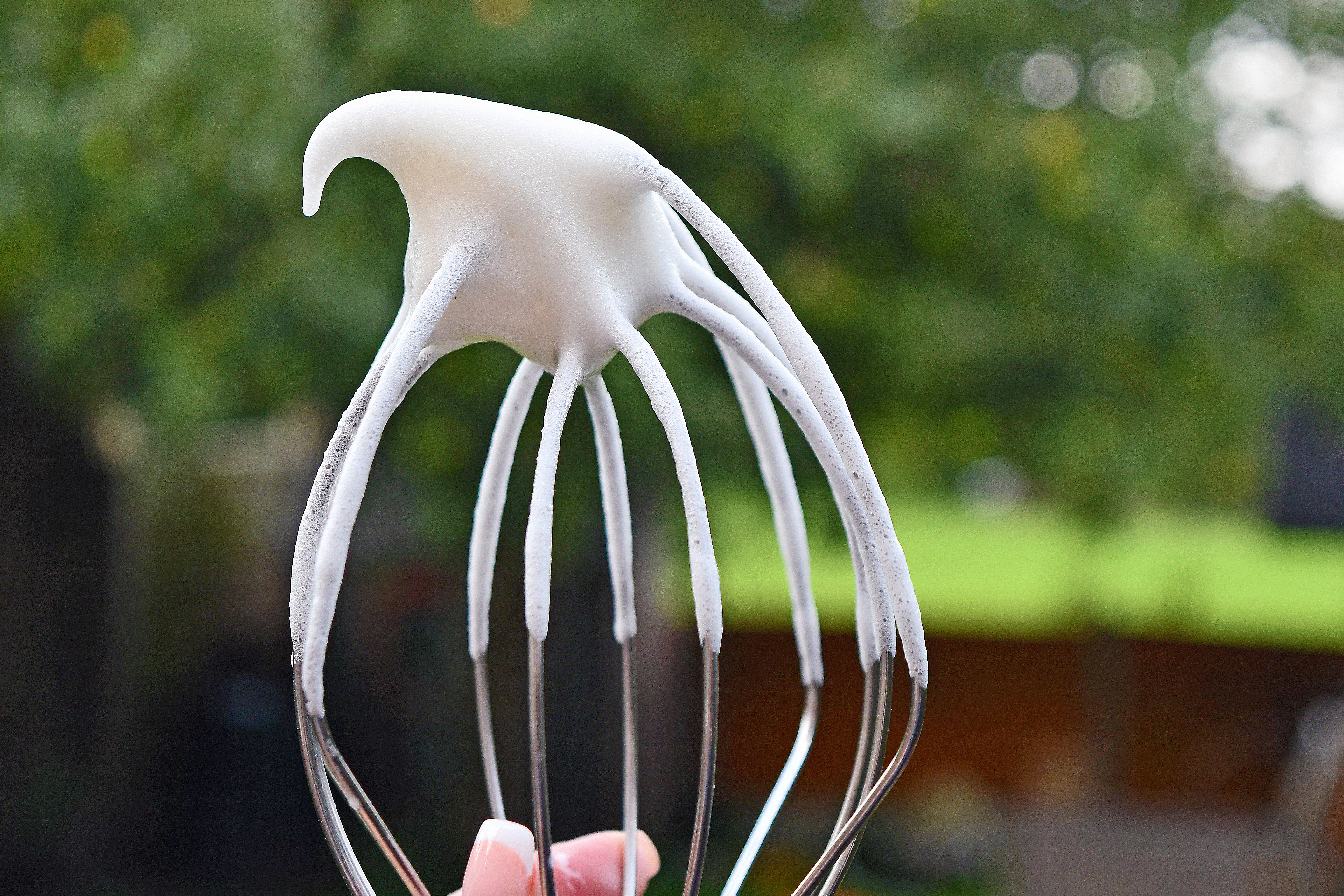
Then gradually add the sugar a spoonful at a time, giving it plenty of time to whisk into the egg whites.

Once the sugar is all in, the mixture will be full of volume and really glossy. Stop whisking and fold in the vanilla a teaspoon of lemon juice and corn flour – this will make the inside chewy and marshmallowy.

Use a little of the mixture to stick the paper to a baking sheet, this will not only stop it moving around when you shape the meringue, but also stop it blowing around in the oven and sticking to the pavlova

Spoon the meringue onto the baking parchment and using a palette knife or offset spatula, mould into whatever shape you like, leaving a dent in the middle for the filling to go into.
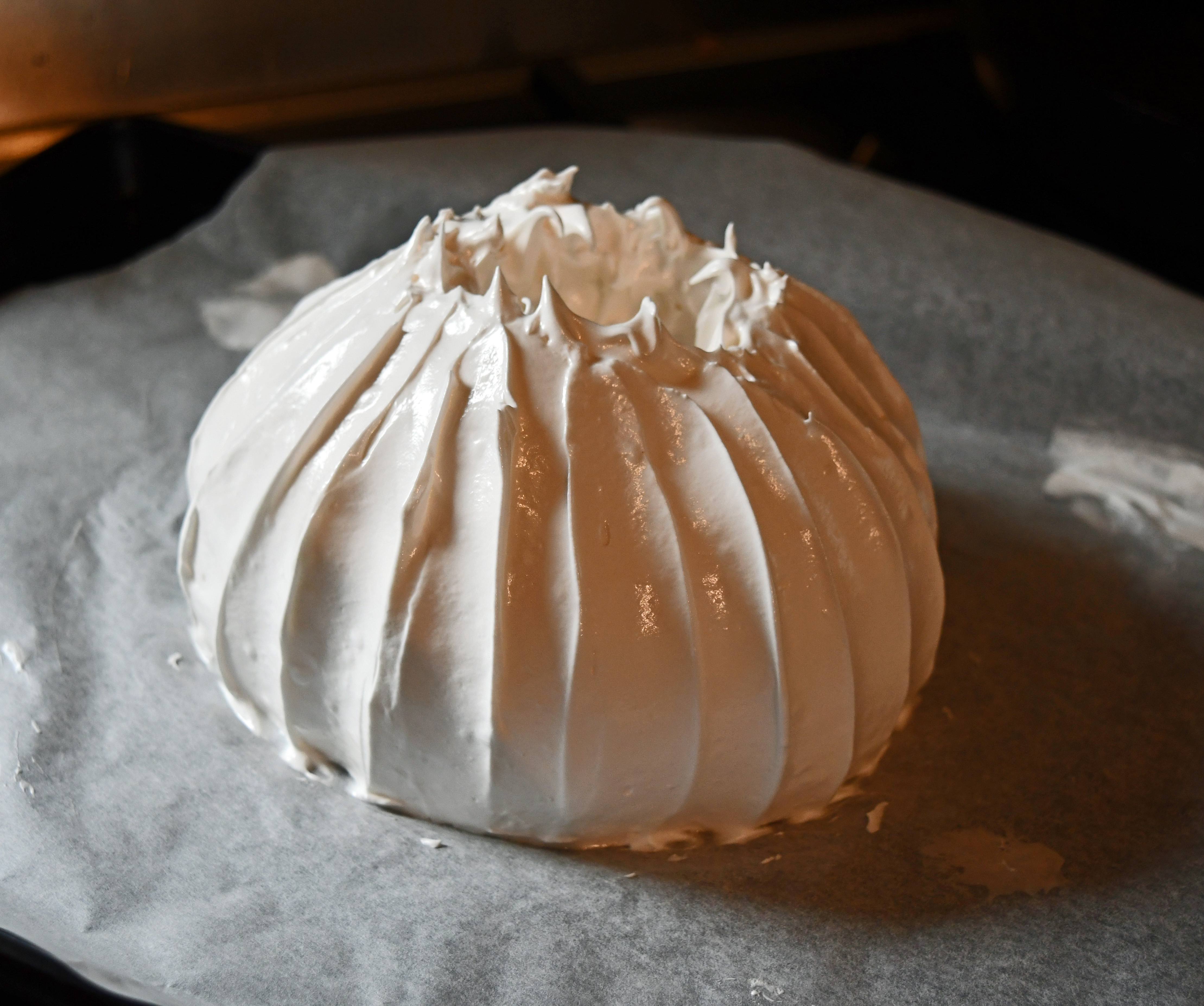
Bake for around an hour and don’t open the oven door. The surface will look dry and become crisp. After an hour, reduce the temperature to 120°C/250°F and leave it for another hour. Once this time is up, turn off the oven but leave the fan on, still not opening the door and leave again for another hour. Turn the fan off and leave it to fully cool, you can leave it overnight at this point.

It should be soft and a little chewy in the middle, but not wet and eggy! The centre will collapse a little which creates a pocket for all the berries and cream. Leave it on the parchment until you are ready to decorate as its quite fragile, mine has a few cracks.
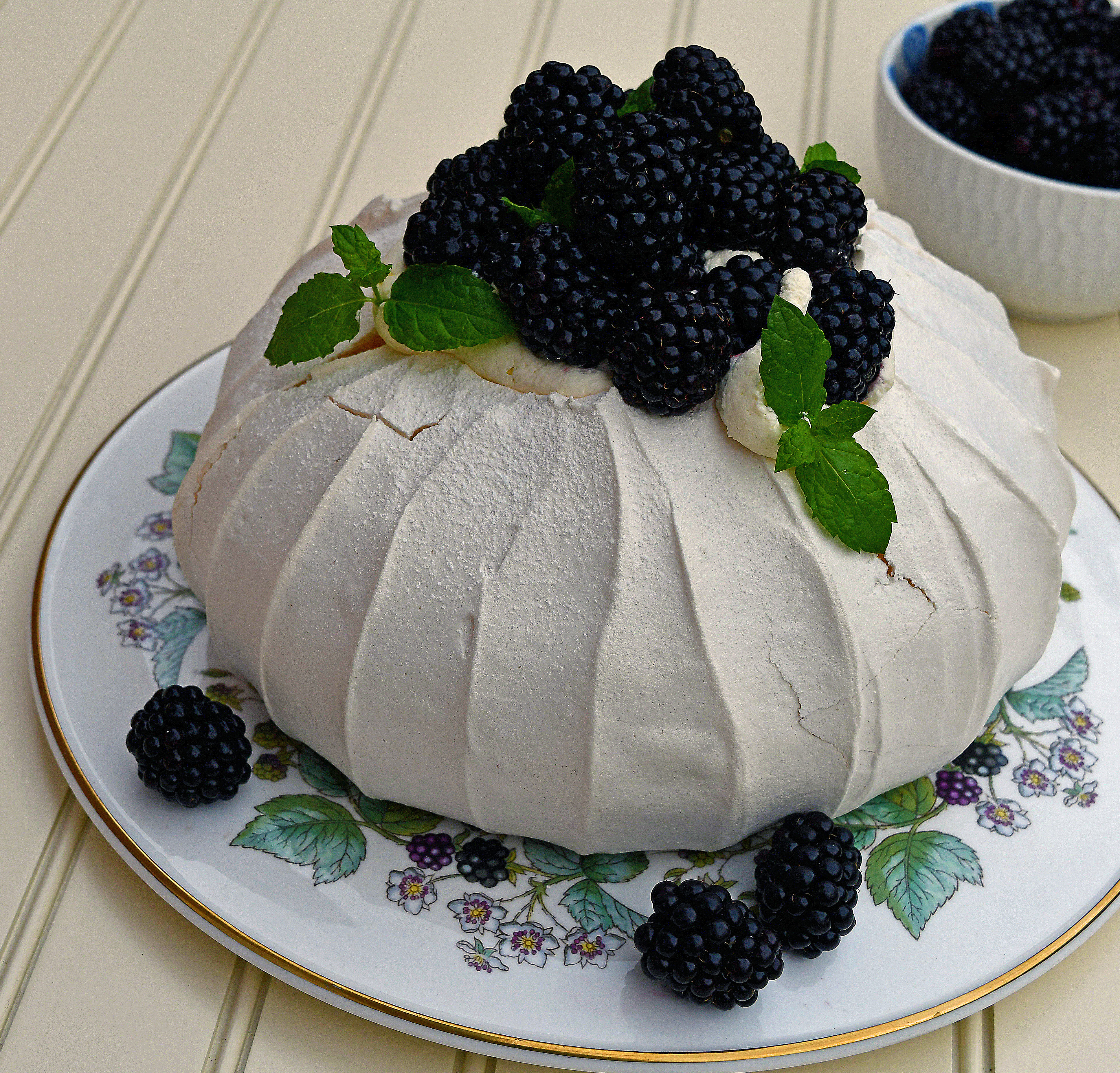
To make the filling, whisk the cream, a tsp of vanilla and 1-2 tbs of icing sugar until it thickens into very soft peaks. Taste for sweetness and take care not to overwhip.

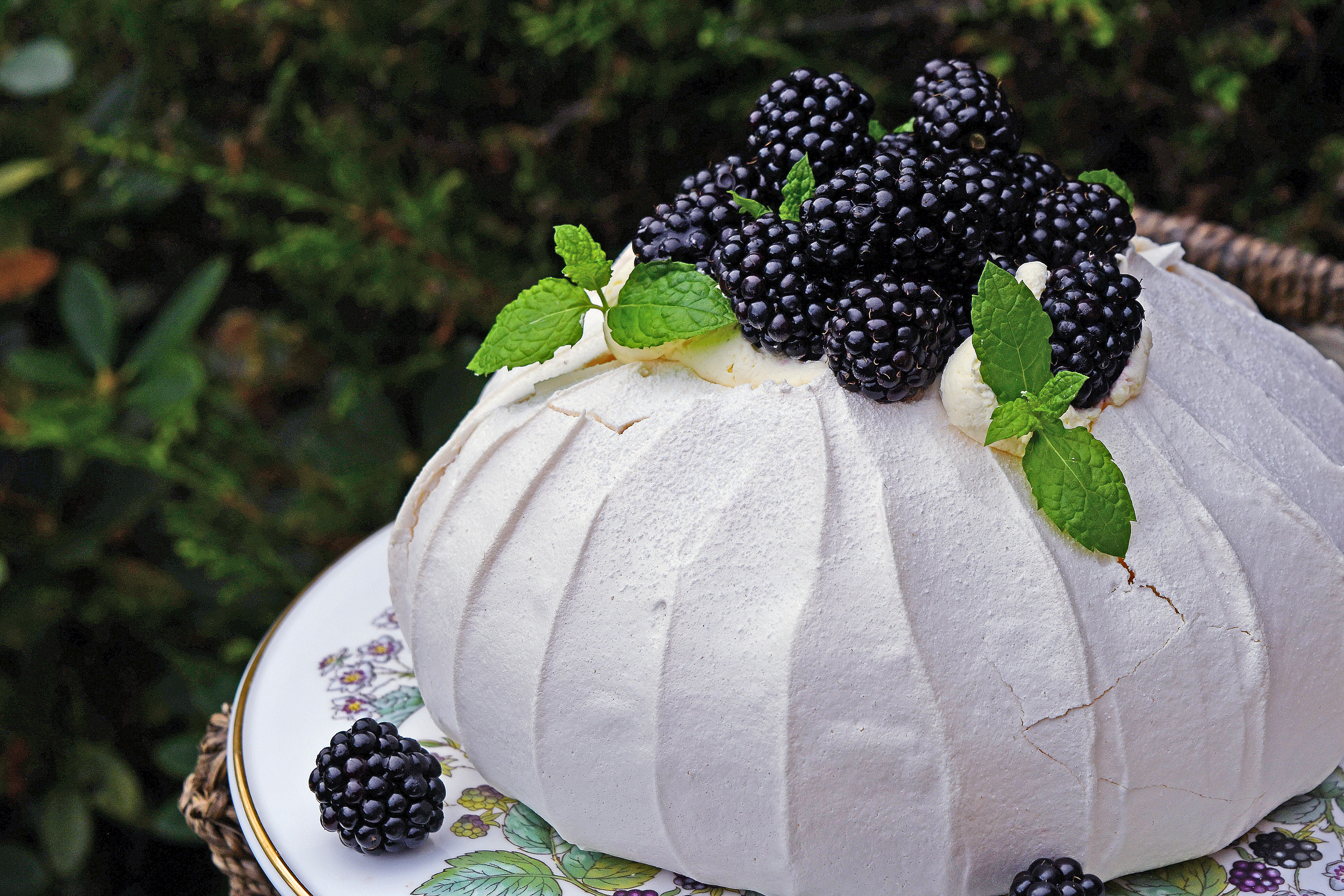
Take a couple of tablespoons of lemon curd and loosely fold into the cream so you have a marbled effect and gently pipe into the centre of the pavlova, along with a layer of berries, top with more cream and lots of blackberries, sprigs of mint and a light dusting of icing sugar.
Crab Apple Jelly

Crab apple jelly is a staple foraging recipe and really easy to make too. If you don’t have a jelly bag, a coffee filter or a muslin square in a sieve over a bowl will do the job.

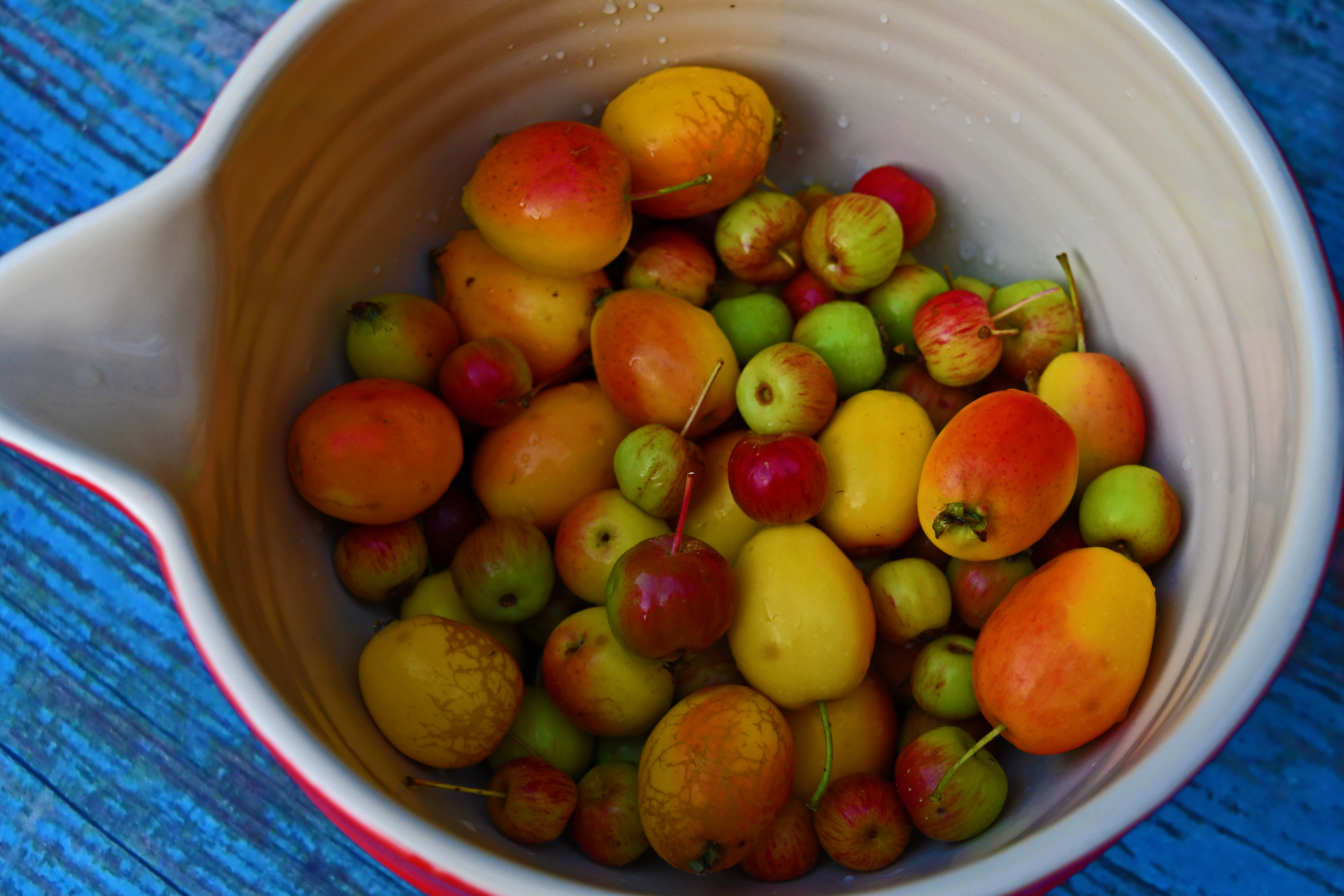
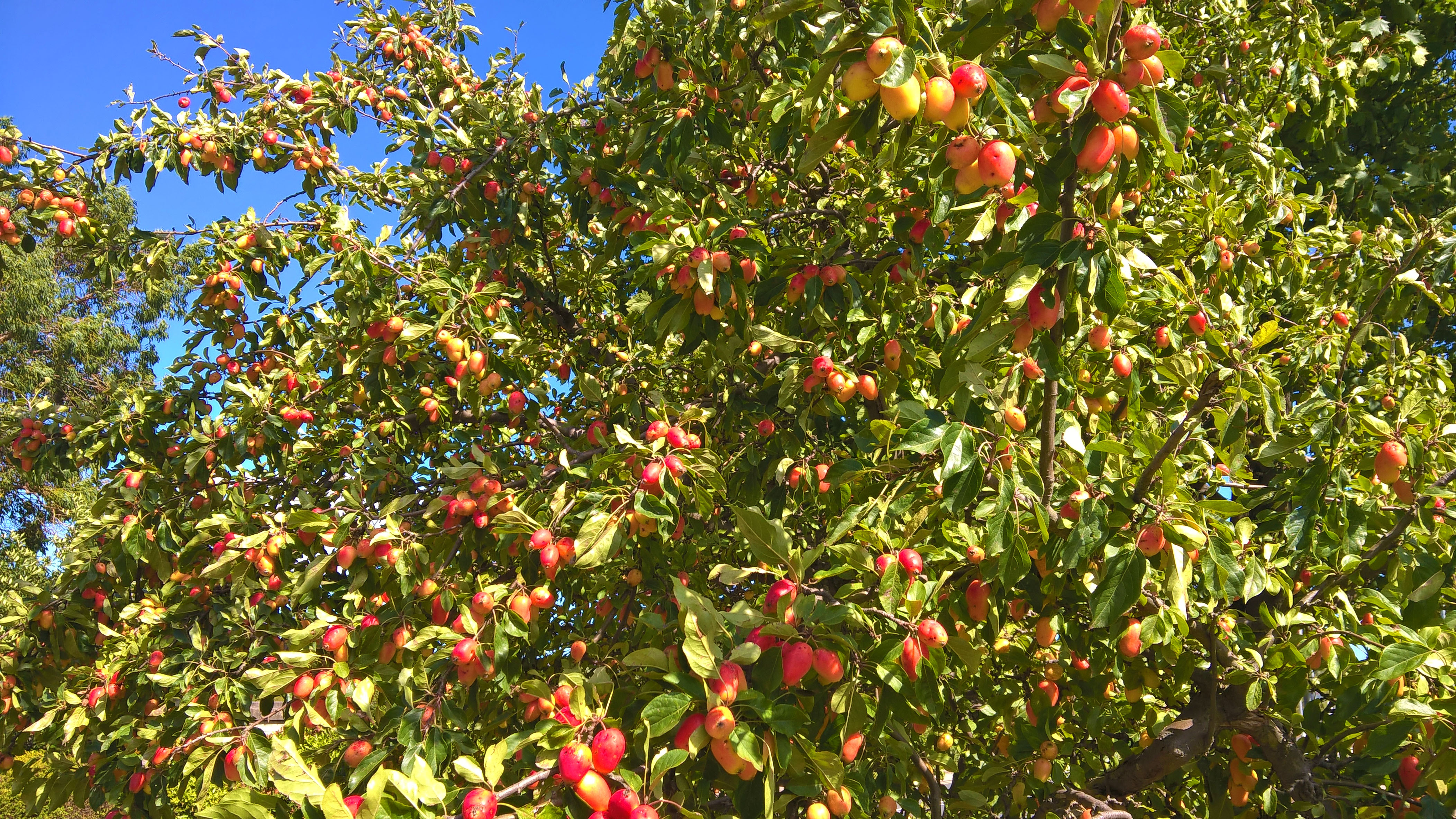
Crab apples are ready from late August onwards, depending on what type you can find. If you are unsure whether they are ripe or not, cut one open – if the seeds are dark brown, then they are ripe.

If you don’t have a crab apple tree in your garden, then you can find them growing in the woods and parks or I’ve heard that you can sometimes find them at a farmers market or farm shop, although I’ve never seen them for sale.

Crab apple jelly can be made in small quantities and there is already lots of pectin in them, so you don’t need to go out and buy special jam sugar. However, if you are nervous about it setting, then you can always slice in a lemon (with the pips) which will help.

The final colour of your jelly will depend on what colour your apples are, but as long as you don’t squeeze or prod the bag, it should be crystal clear.

Ingredients:
Crab apples
One lemon
White granulated sugar

I picked up a couple of varieties here, the larger oval ones are always ready in August, but the smaller ones are usually later. I think everything has ripened quicker in the recent heatwave

Method:
Wash the crab apples and remove any spent blossoms (beards) and stems. However, if your apples are really tiny, you can leave them whole, but its best to cut off any bruises and if you are worried about any creatures lurking inside then cut them in half.

Place them in a saucepan, or a preserving pan if making a larger quantity, along with the sliced lemon and add enough water to almost cover the apples.

Bring the pan up to the boil and then simmer gently for around 40 minutes, or until the apples are soft and broken down, you can give them a gentle mash with a potato masher to help this along.

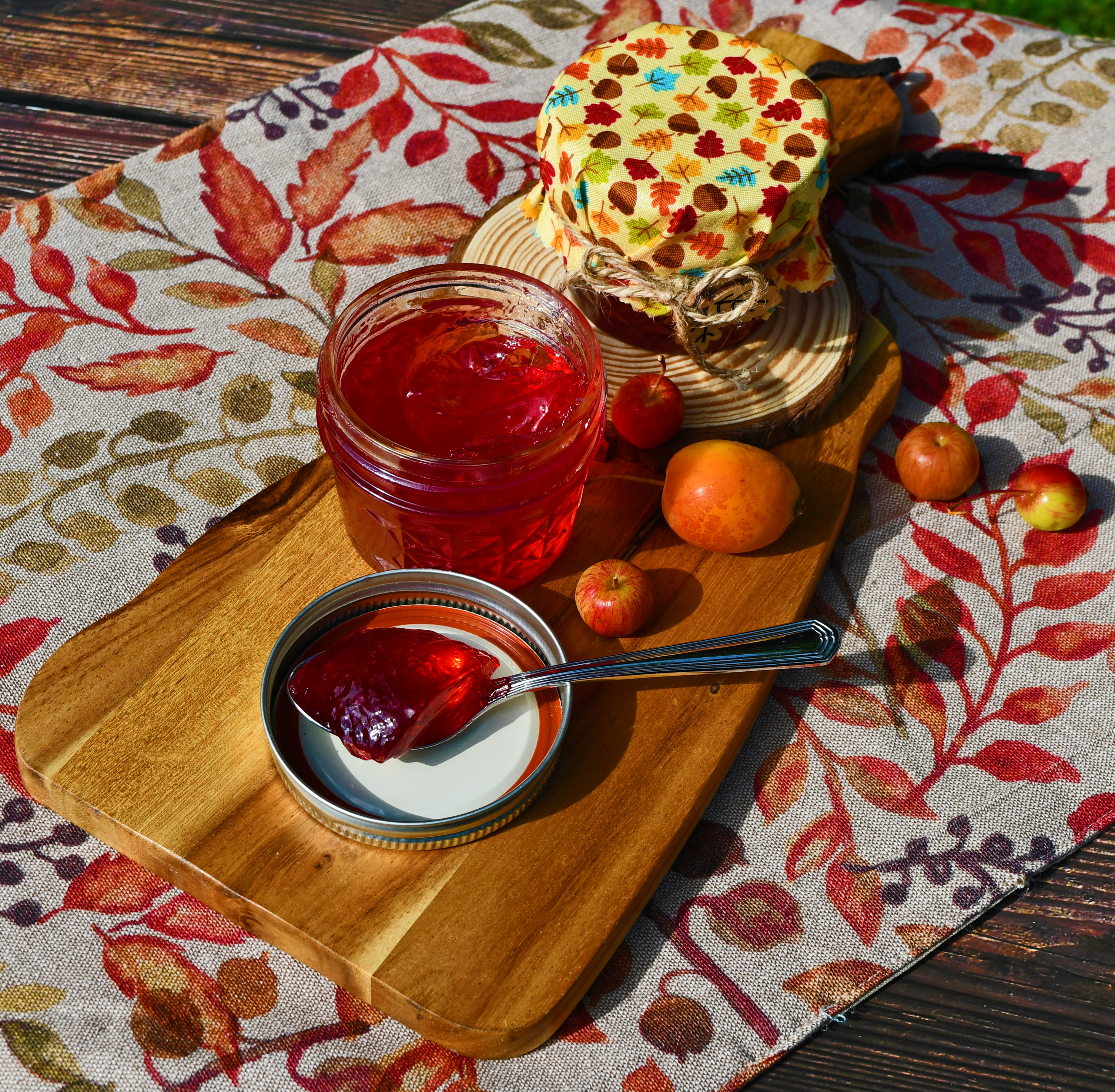
These little jars make great gifts, especially if you dress them up with a fabric cover

When ready, carefully fill your waiting jelly bag or prepared sieve and muslin with the fruit and leave to drain preferably overnight until every last drop has strained through. Just remember not to squeeze or ‘help’ the liquid come through, or your final jelly will be cloudy.

When you are ready to make the jelly, place a few plates into the freezer so that you can test if the jelly is ready to set.

Weigh the liquid and then weigh out three quarters of sugar to the liquid (I do admit to asking Alexa to help me with the sums!)

Place the liquid into a saucepan, add the sugar and stir over a medium heat until you are sure all the sugar has dissolved.

Turn the heat up until boiling and skim off any foam that rises to the surface. This will help your final jelly be as clear as possible.

Boil for around 8-10 minutes before testing to see if its ready to set. You can also use a candy thermometer. When it reaches 105°C/220°F, it should be at setting point, but the wrinkle test will work just as well.

Take a teaspoon of the jelly and drop it onto a cold plate and push with the back of a spoon. If it wrinkles, then it’s ready to pot.

Using a ladle and preferably a funnel, pot into sterilised jars and put the lids on right away.

Keep in a cool dark place until you are ready to use.

The little jars are great to take along on a picnic, but they also make nice gifts or part of a hamper

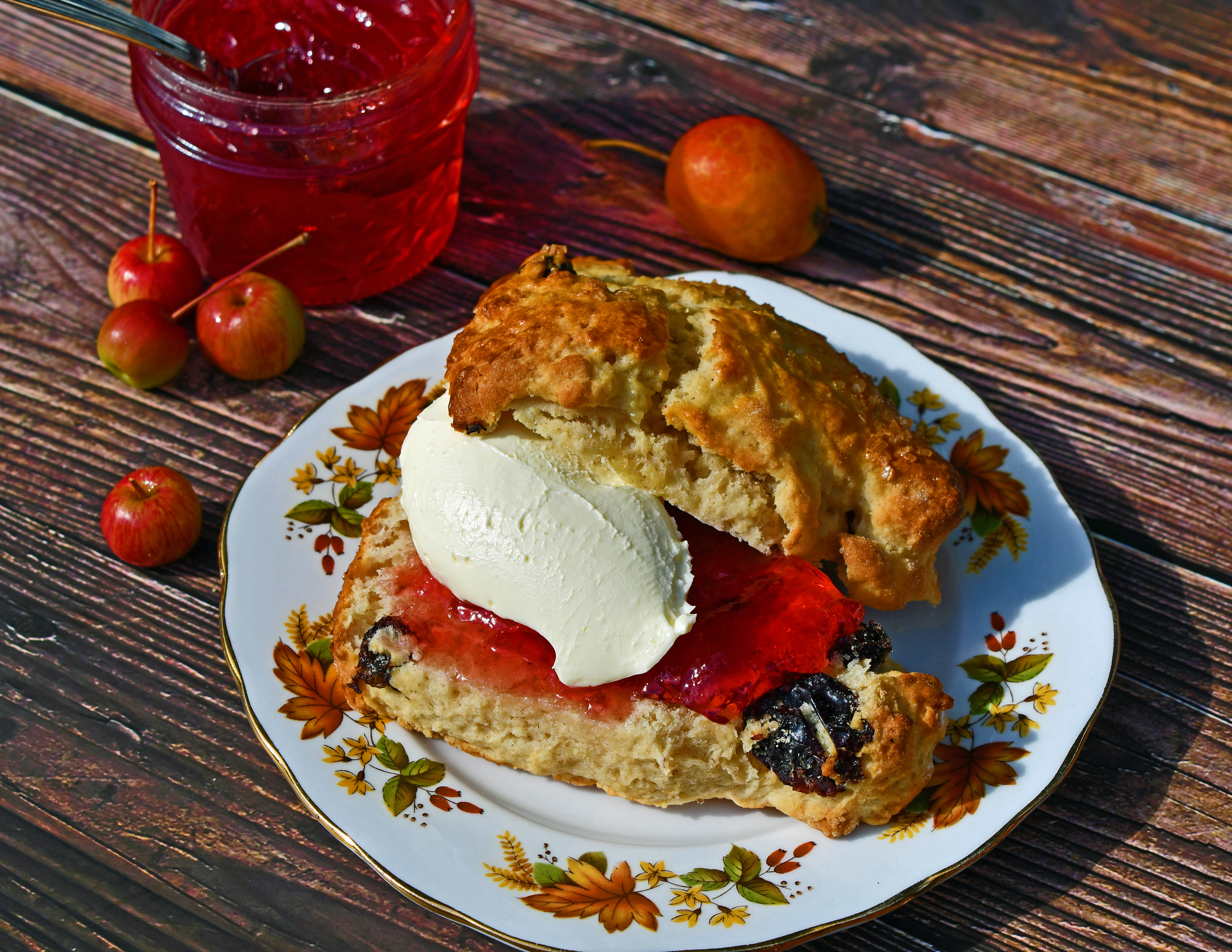
I served the jelly on a big, craggy fruit scone, just the thing for a late summer afternoon in the garden

The jelly can be served as an accompaniment to roasted or grilled meat, or served on toast, muffins or scones.

Elderflower Cordial

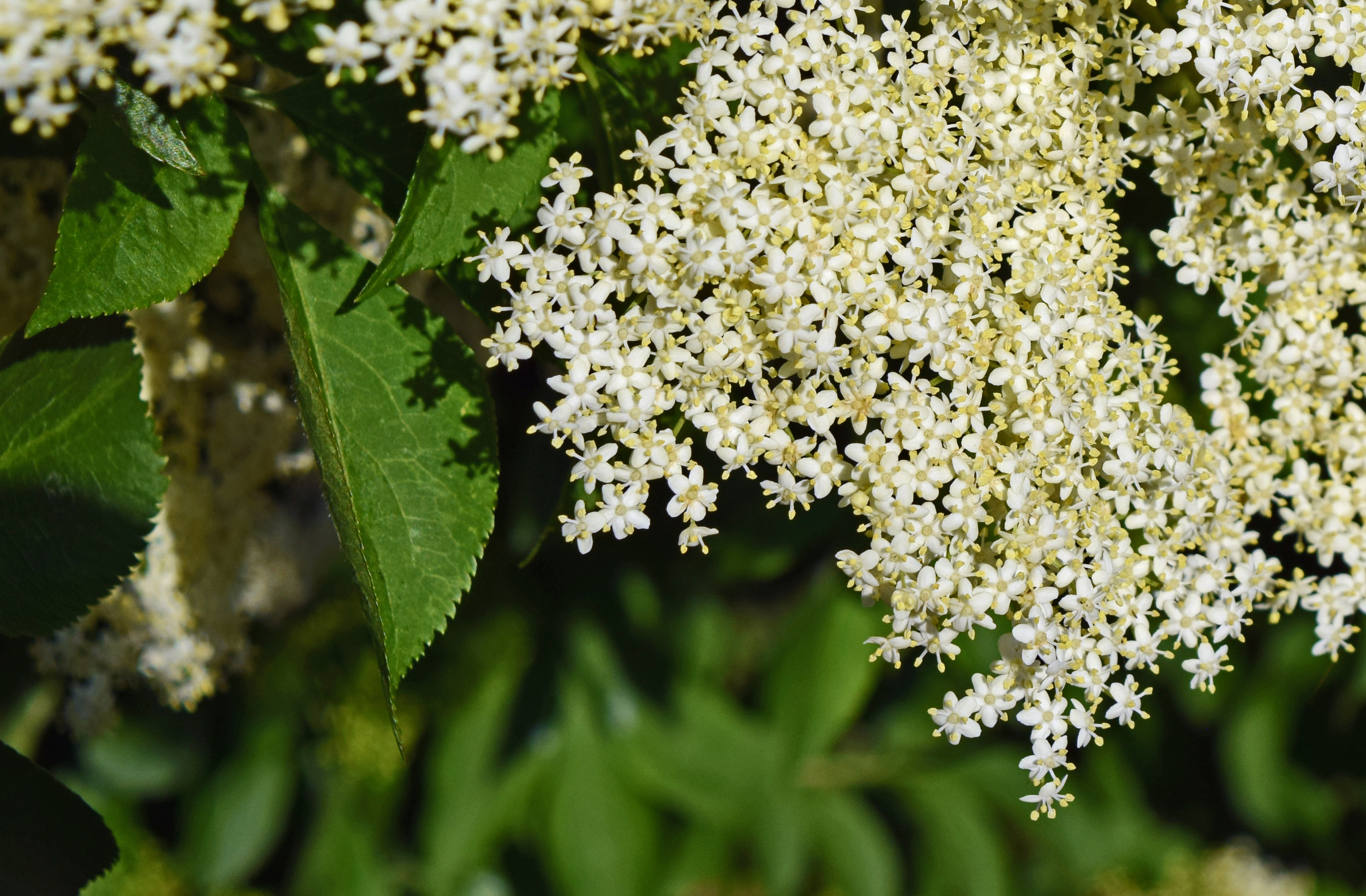
You know summer has arrived when the elder is in bloom.  You can often smell the sweet, pungent flowers carried on the warm June air well before you find the tree itself.

ElderflowersThe flowers are easily identified by their heady scent, but if you’re not sure, look out for the flat topped heads that appear in abundance at the end of May and into June in hedgerows, woodland and scrubland.  Lots of people have them in their gardens too and according to folklore, an elder planted by your home will keep the devil away.
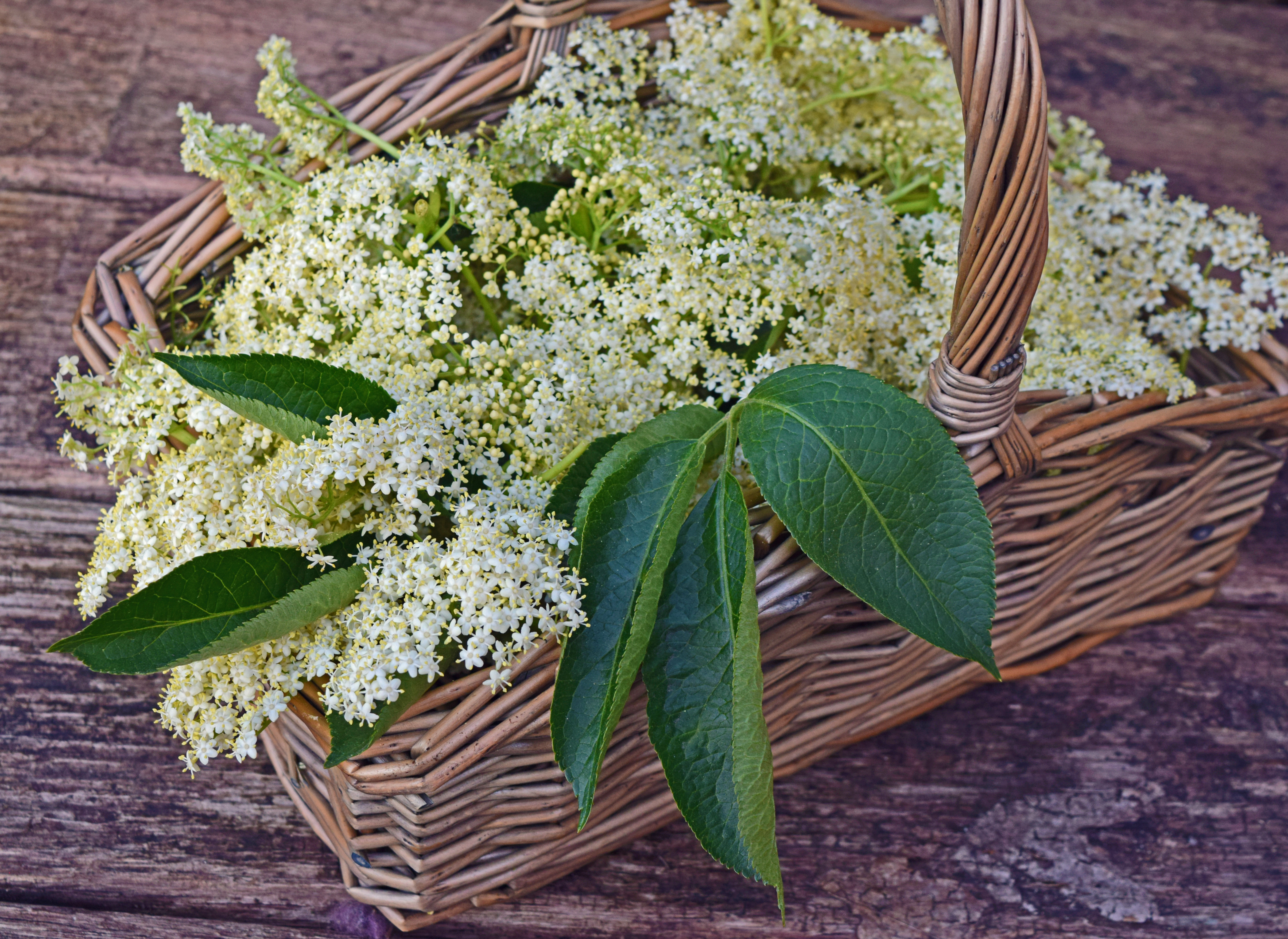
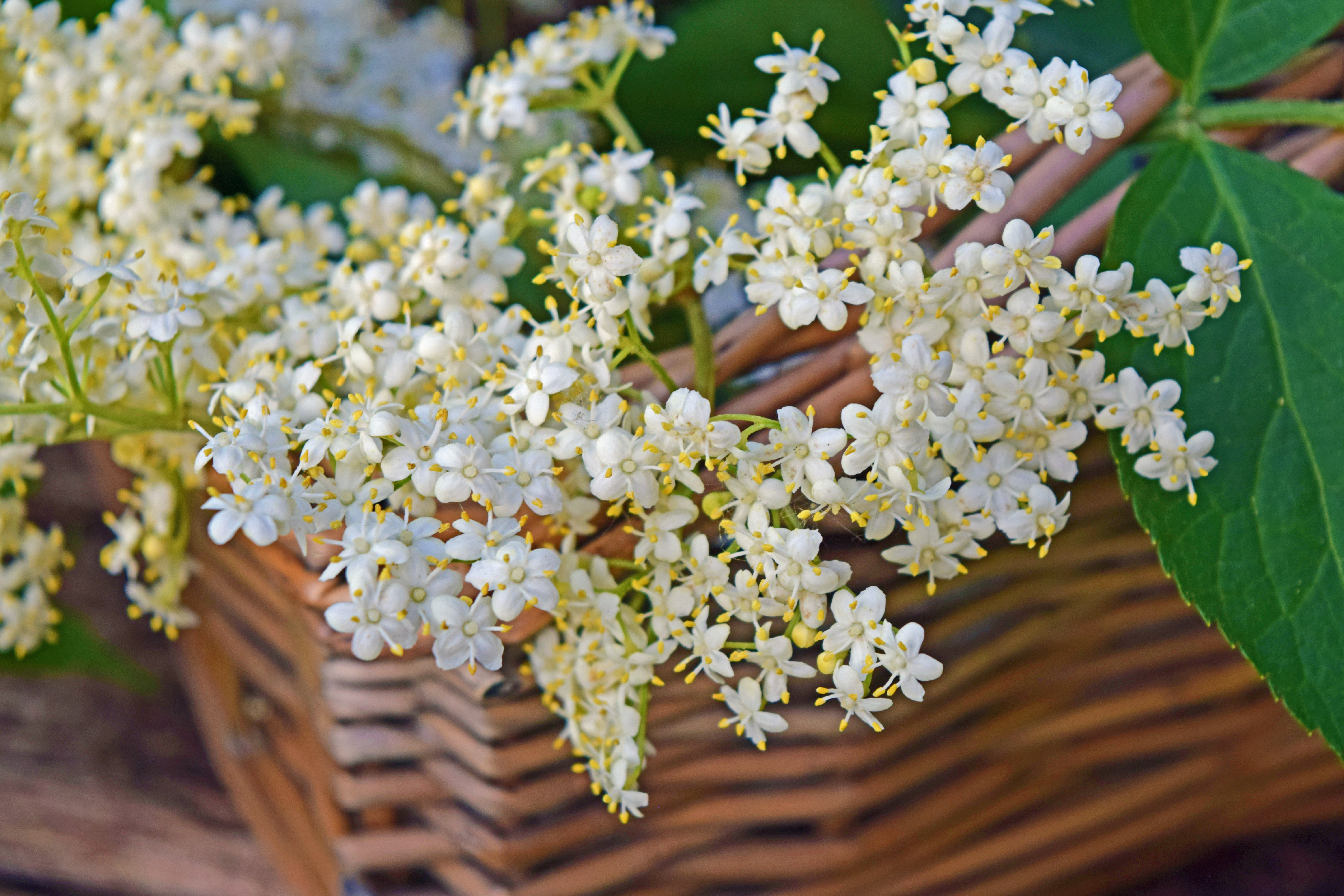
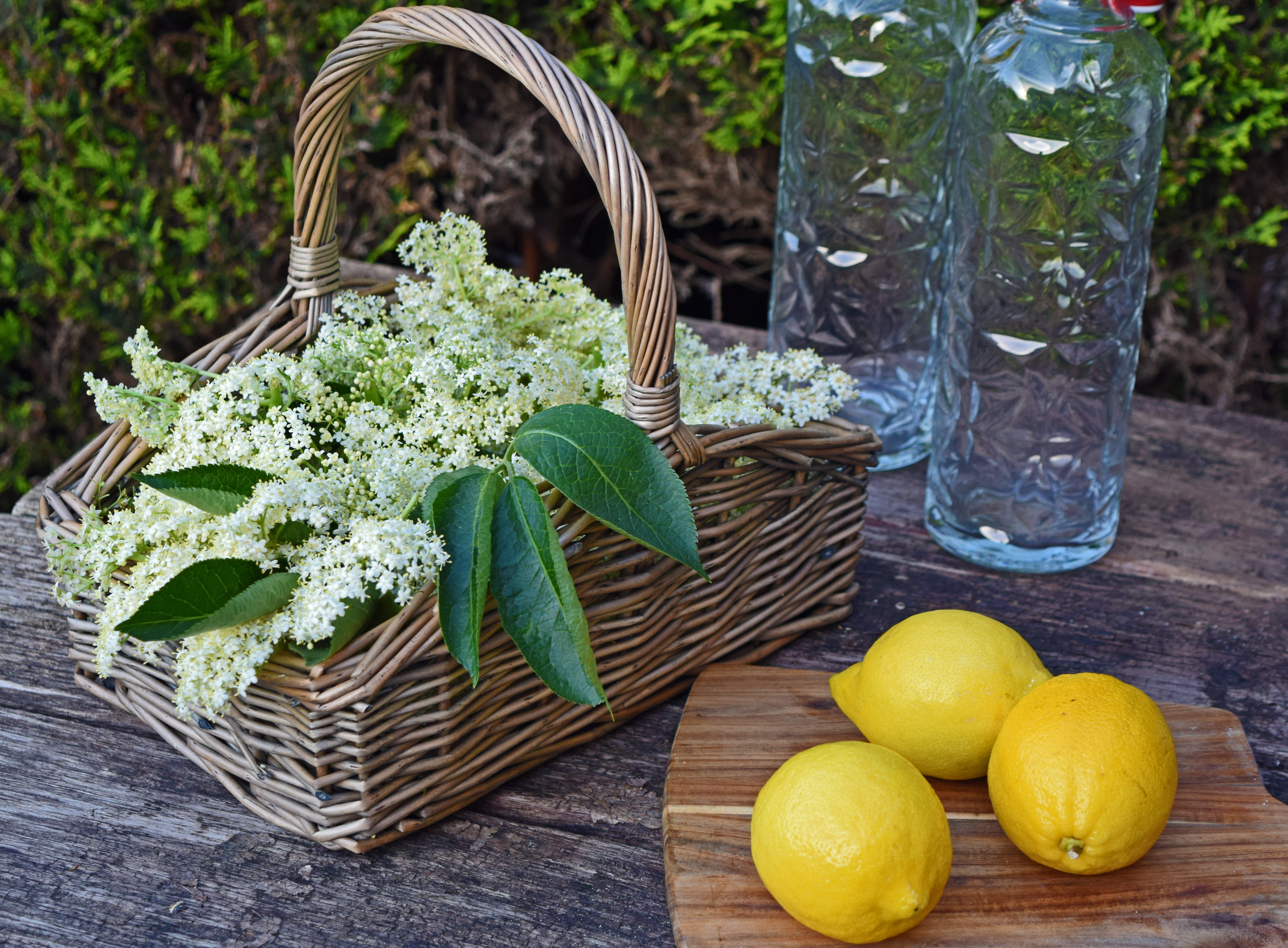
The flowers don’t last for long and so now is the time to gather them to bottle a taste of summer.
Elderflower Basket
You can make lots of things out of the flowers – sorbet, fritters and champagne, but old fashioned cordial is super easy and tastes much better than the stuff you can buy year round in the supermarket.

The flowers are easy to harvest if you take a pair of sharp scissors or some secateurs out with you on your walk, and a basket to carry them in.  They wilt really quickly, so make sure you pick them on your way back home and choose a warm, sunny day when they will be at their very best.

Also, make sure you don’t pick too many flowers all from the same tree, or there won’t be any flowers left for the bees, or any berries – we will be back for you later…!

The following recipe makes around 2 litres, but can easily be sized up for a bigger batch and the sweetness adjusted to taste.  I think you need a jelly bag to make this as you need to strain the infusion, but you could use muslin and a sieve too.

Elder basket
Ingredients:
Around 30 heads of elderflowers, picked on a warm, sunny day
6 unwaxed lemons
1kg of sugar, or 800g sugar and 4tbs of runny honey
1tsp citric acid
1.5 litres of water

Elderflower cordial prep
Method:
Before you start, you have a choice, to wash the flowers, or not!

Lots of people think if you wash the flowers, you wash away the pollen and lots of the flavour and fragrance.  However, the flowers are usually full of thrips, also known as thunderflies or thunderbugs, so some people prefer to wash the flowers to remove them.

You will be straining the final product, but if you prefer to not see your lovely elderflower infusion teaming with hundreds of insects, then wash them!  I washed mine and still found a few in the jelly bag.  The final cordial was still full of flavour and fragrance too, so the choice is yours.

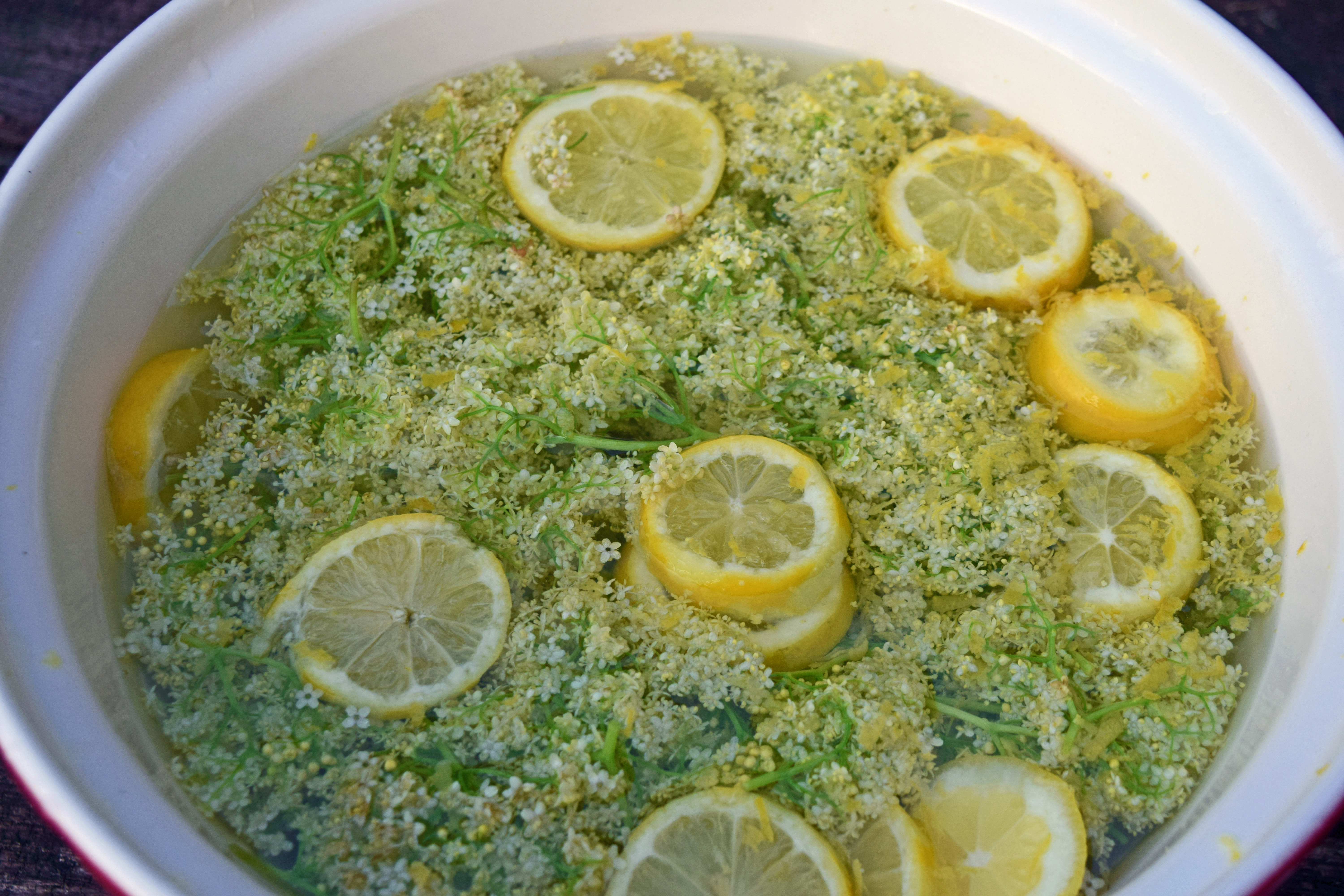
Snip the flowers into a clean bowl with the grated zest of 4 lemons and 2 sliced lemons.  Boil the water and pour over the flowers and lemons, stir, cover with a tea towel and leave overnight to infuse.  Reserve the zested lemons as you will need the juice.

Elderflower infusion
The next day, when you are ready to make the cordial, sterilise the bottles by washing in hot soapy water and then placing them in the oven at 140°C/210°F for up to 20 minutes.

Strain the infusion through a scalded jelly bag into a large pan and add the sugar (or sugar and honey), juice of 4 lemons and the citric acid.

Heat gently, stirring until the sugar has dissolved and bring up to a simmer but don’t let it boil.

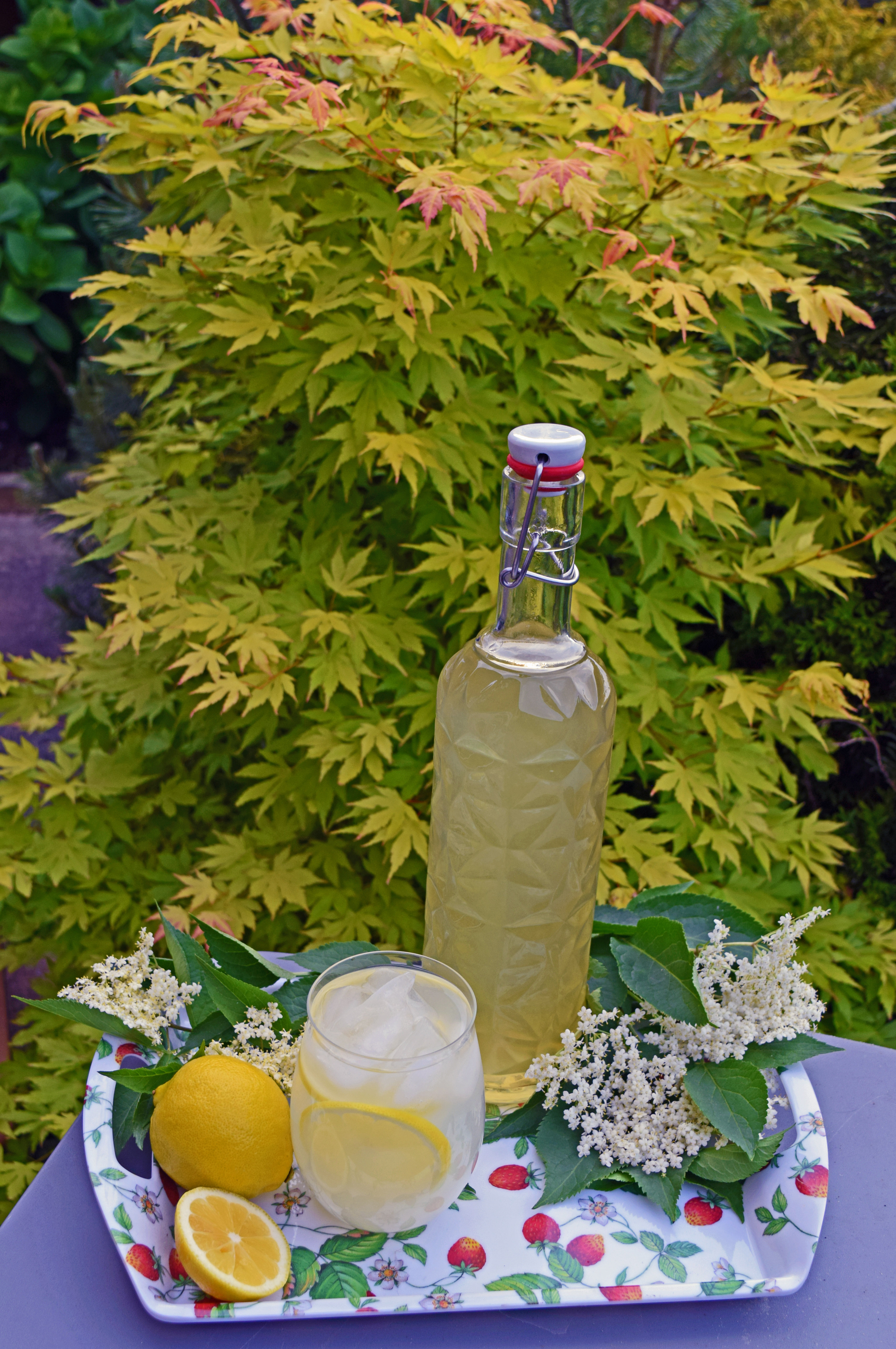
Using a funnel, or very carefully, pour the hot cordial into the hot, sterilized bottles and seal using screw tops or swing-top stoppers like I used.  Leave to cool and store somewhere cool or the refrigerator for up to 4 months.

Elderflower cordial

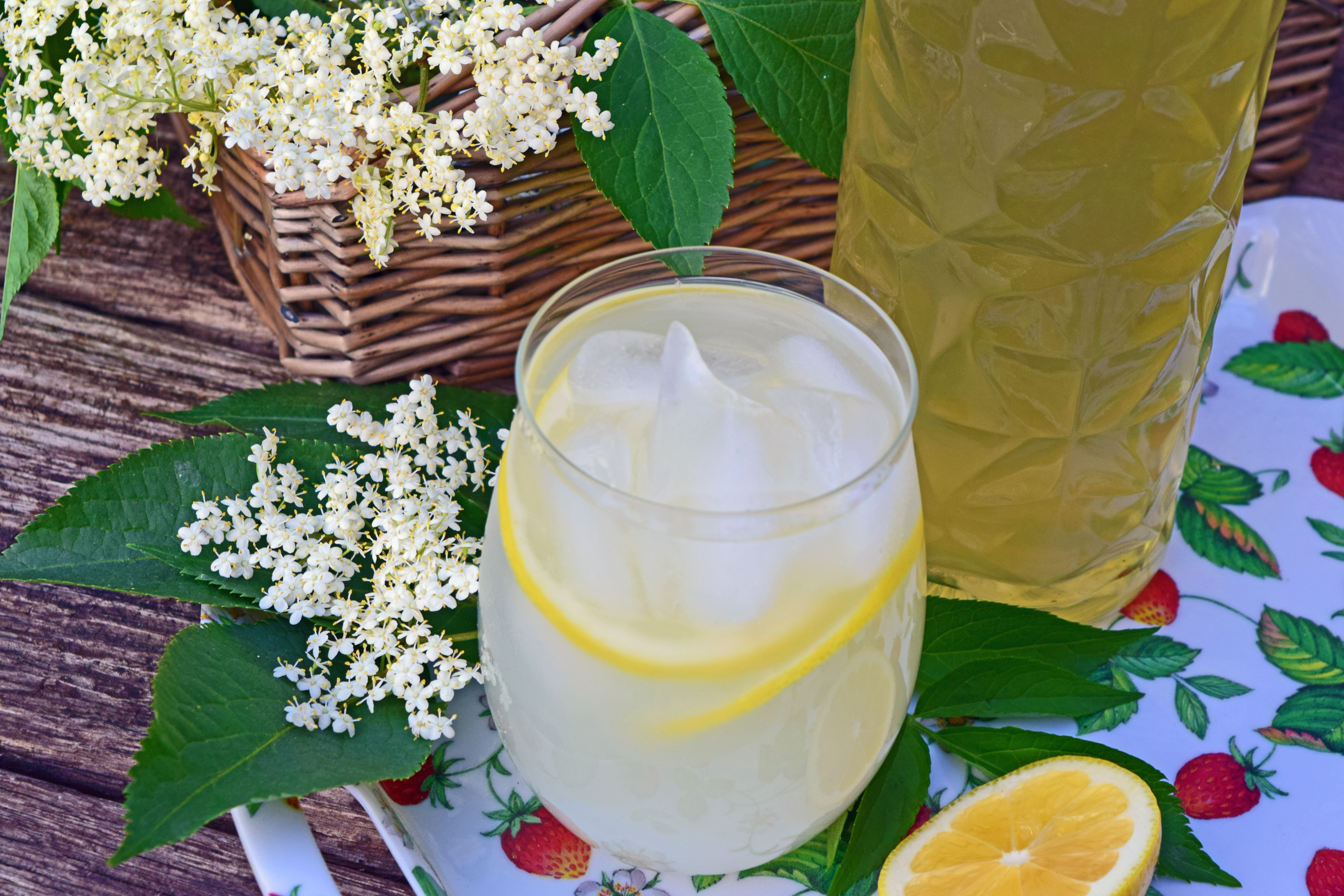
The cordial can be diluted with water and ice for a refreshing drink on a hot day or added to prosecco, cocktails and a couple of tablespoons added to icing sugar makes a lovely summery frosting for cakes too.

If you have any cordial left over that doesn’t fit in the bottles, you can freeze into cubes to add to a gin and tonic, or add a little water and make ice lollies.

Elder cordial